
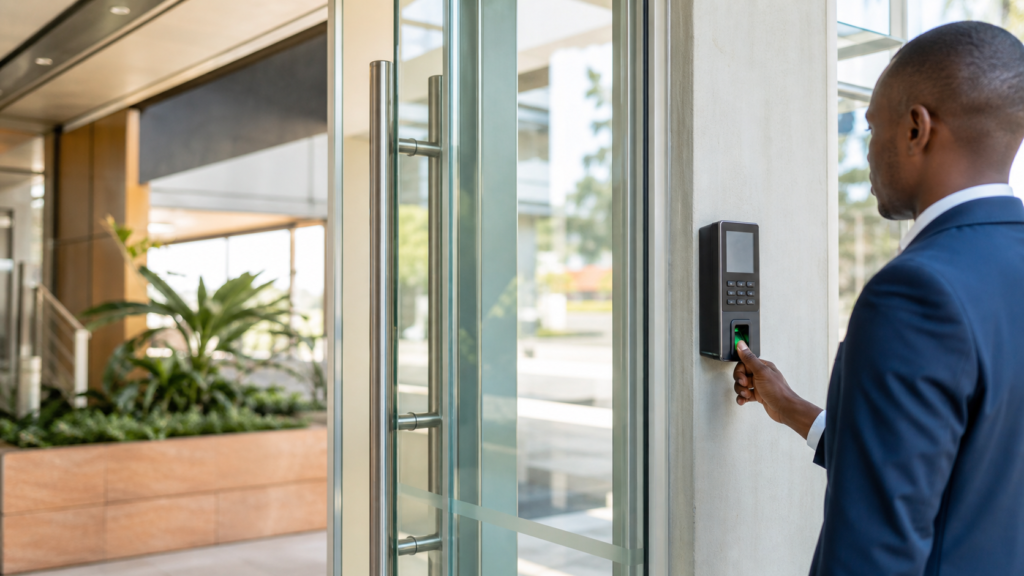
Late arrivals, disputed overtime and handwritten registers make payroll slower than it should be. The best biometric time attendance systems in Kenya give employers a dependable way to record who arrived, when they left and which hours need approval.
Why the best biometric time attendance systems in Kenya matter
A sign-in book cannot confirm identity, is difficult to audit and turns a small payroll query into a search through paper. Cards help, yet cards can be shared or lost. A biometric terminal instead matches a person’s fingerprint, face or palm to an enrolled template. It creates an event trail that a manager can review before payroll closes.
This is not about treating people with suspicion. It is about making attendance rules consistent. When a business defines schedules, grace periods and approval routes clearly, staff know how time is counted and supervisors spend less time resolving avoidable disputes.
Challenges Kenyan employers face
Growing teams often work across branches, shifts and field assignments. Power interruptions, dusty entrances, weak network coverage and peak-time queues can also affect a purchase decision. Therefore, the best biometric time attendance systems in Kenya must suit the site, not merely look impressive on a specification sheet.
- Proxy attendance and missing paper records.
- Manual overtime calculations and unclear shift rules.
- Slow reporting across several locations.
- Privacy concerns when staff do not understand the system.
- Devices installed without a backup process or trained administrator.
How to choose the best biometric time attendance systems in Kenya
Start with the workflow
List your headcount, entrances, shift patterns and payroll export requirements. A small office may need one fingerprint reader and a simple monthly report. A factory may need several terminals, access-control integration and offline event storage. Choose capacity for the next stage of growth, rather than buying again after one busy season.
Select the right verification method
Fingerprint systems are familiar and economical. Face recognition can reduce touch at a busy entrance. For demanding sites, ask about false-rejection performance, lighting tolerance, liveness detection and the enrolment process. Test the device with real users before rolling it out.
| Need | Useful feature |
|---|---|
| Several shifts | Flexible schedules, grace periods and overtime rules |
| Unreliable internet | Offline logs and later synchronisation |
| Secure premises | Door relay and access-control integration |
| Payroll review | Exportable attendance reports and approvals |
Key components of a reliable setup
The terminal is only one piece. Specify stable power, a protected mounting location, network configuration where needed, administrator accounts and a documented escalation path. Pair a time terminal with suitable access-control systems when the same identity check should open an authorised door. At sensitive entrances, a visible CCTV camera can support incident review without replacing attendance data.
Implementation that employees will accept
- Publish the purpose, attendance rules and responsible contact.
- Enroll staff carefully and confirm each person can authenticate.
- Run a short parallel period with the existing record.
- Review exceptions with managers before payroll processing.
- Audit access rights, backups and device health monthly.
Collect only what the process needs. Restrict administrator access, retain data for a defined period and explain how employees can raise a correction. Good governance protects people and improves confidence in the records.
Benefits beyond a clock-in screen
Well-run systems give managers timely attendance visibility, provide a fair basis for approving overtime, reduce repetitive data entry and make trend discussions more factual. They can also simplify multi-site supervision. However, technology cannot repair vague policies. Pair the device with clear working-time rules and humane manager judgement.
Frequently asked questions
Can a biometric terminal work without internet?
Many devices store events locally and synchronise later. Confirm storage capacity and the export method before purchase.
Is fingerprint better than face recognition?
Neither is universally better. Choose according to throughput, hygiene preference, lighting, budget and site conditions.
Can the terminal control a door?
Yes, compatible models can work with locks and door controllers. Have the complete installation assessed first.
What should I ask a supplier?
Ask about enrolment capacity, reporting, warranty, installation, support, power backup and staff training.
Choose a system with confidence
Browse the biometric time attendance system and related products in our access-control collection. Share your staff numbers, shift pattern and site conditions with Affrosonic Systems for a practical recommendation. The right system should make attendance clearer, fairer and easier to manage.
Explore access-control options, CCTV cameras, electric-fence equipment, fire-safety systems and practical security accessories. Before checkout, read the delivery and ordering information, terms and conditions and return and refund policy.

Kelvin
Secure your property with Affrosonic Systems. Kenya's trusted provider of Ladders, biometric access controls, electric fences, and automated gates